How to Keep Teams Synced During Projects

Keeping everyone aligned during a project is essential for success. In fact, studies show that poor communication is responsible for nearly 30% of project failures, while teams that communicate effectively are up to 4.5 times more likely to complete projects successfully. Despite this, many teams still rely on scattered updates, inconsistent reporting, or last-minute check-ins that leave stakeholders confused and disengaged.
The reality is simple: when people don’t know what’s happening, they make assumptions. And assumptions lead to missed deadlines, duplicated work, and costly mistakes.
So how do you keep everyone informed without overwhelming them?
In this guide, we’ll walk through practical, easy-to-implement strategies to keep your team and stakeholders consistently up to date throughout the project timeline. We’ll also show how a structured approach—like using a Project Status Report Template—can turn chaotic updates into clear, actionable communication.
Why Keeping Everyone Updated Matters
Before diving into the “how,” it’s important to understand the “why.”
Projects involve multiple moving parts—tasks, people, deadlines, risks, and expectations. Without a consistent flow of information:
- Teams lose clarity on priorities
- Stakeholders feel disconnected
- Risks go unnoticed until it’s too late
- Decision-making slows down
On the other hand, when communication is clear and consistent:
- Everyone knows what to focus on
- Issues are identified early
- Accountability improves
- Trust across the team increases
Ultimately, keeping everyone updated isn’t about sending more messages—it’s about sharing the right information in the right way.
Common Challenges in Project Communication
Even experienced teams struggle with keeping updates consistent. Here are some of the most common pitfalls:
1. Too Many Communication Channels
When updates are spread across emails, chats, meetings, and documents, important information gets lost.
2. Inconsistent Reporting
Some weeks have detailed updates, others have none. This inconsistency creates confusion and gaps in understanding.
3. Overloading Stakeholders
Sharing too much detail can be just as harmful as sharing too little. Stakeholders need clarity, not clutter.
4. Lack of Structure
Without a standardized format, updates vary in quality and completeness.
The solution? A simple, repeatable system for sharing updates.
7 Practical Ways to Keep Everyone Up to Date
1. Establish a Clear Reporting Rhythm
Consistency is key. Decide how often updates should be shared—weekly, bi-weekly, or monthly—and stick to it.
For most projects:
- Weekly updates work best for active projects
- Bi-weekly updates suit longer timelines
This predictability helps stakeholders know when to expect updates and reduces the need for constant follow-ups.
2. Centralize Project Information
Avoid scattering updates across multiple platforms. Instead, create a single source of truth where everyone can access the latest project information.
This could be:
- A shared document
- A project management tool
- A standardized report
The goal is simple: if someone asks, “What’s the current status?” there should be one clear place to look.
3. Use a Structured Project Status Report
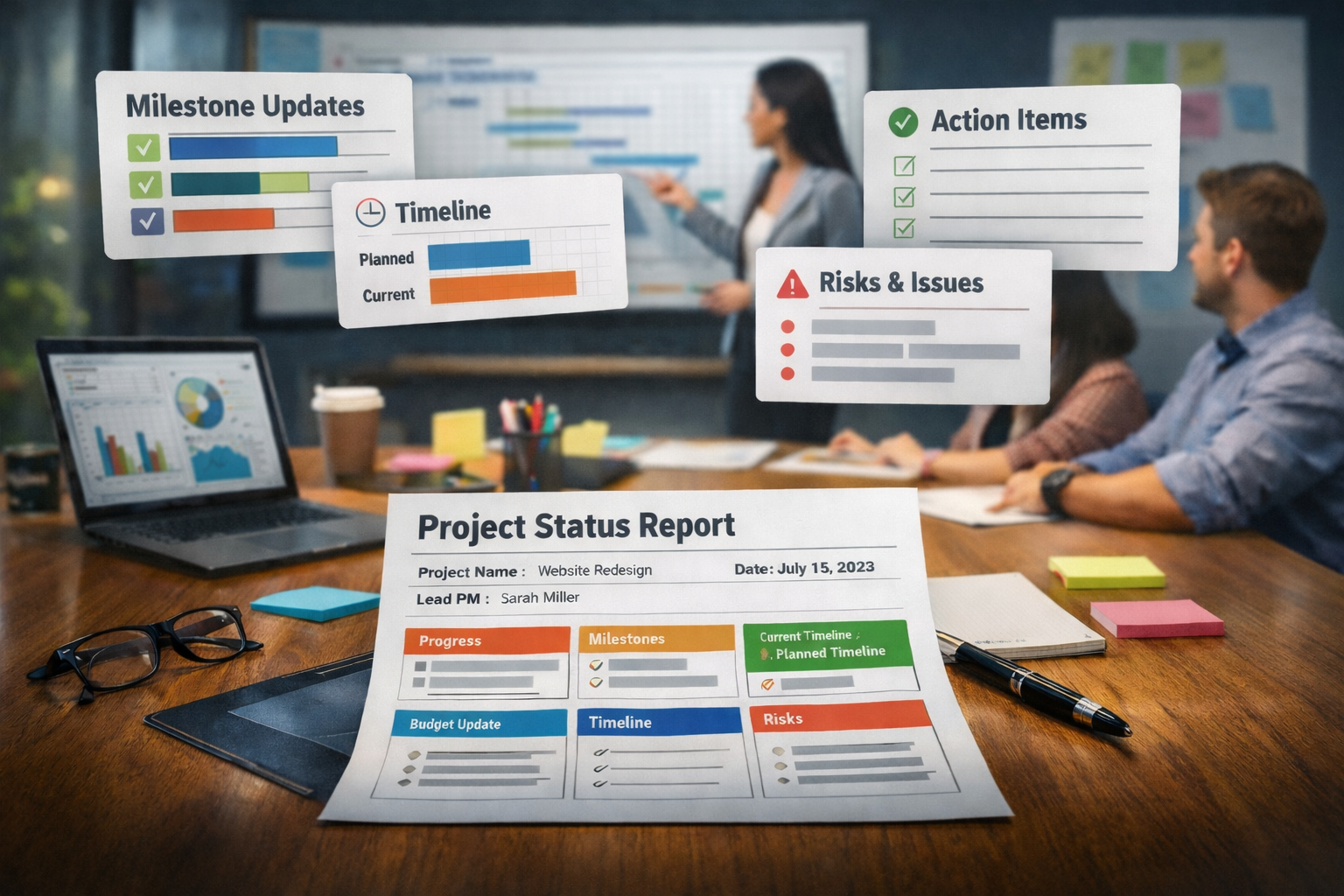
One of the most effective ways to keep everyone aligned is by using a consistent reporting format. A well-designed Project Status Report Template ensures that no critical information is missed.
Here’s what a strong report should include:
Basic Information
Start with the essentials:
- Project name
- Lead project manager
- Reporting date
This provides context and makes reports easy to track over time.
Progress Summary
Give a short, high-level overview of what’s been achieved since the last update.
Keep it concise—this is often the first (and sometimes only) section stakeholders read.
Overall Project Updates
Highlight any major changes, including:
- Scope adjustments
- Budget updates
- Schedule shifts
This ensures transparency and helps stakeholders stay aligned with evolving project realities.
Milestone Updates
Break down progress toward key milestones.
This helps answer critical questions:
- Are we on track?
- What’s been completed?
- What’s coming next?
Timeline Comparison
Compare the estimated timeline with the current progress.
This is where delays—or early completions—become visible. It also helps teams adjust expectations proactively.
Action Items and Deliverables
List:
- Ongoing tasks
- Upcoming deliverables
- Assigned responsibilities
This keeps everyone accountable and focused on next steps.
Risks and Issues
No project is without challenges. Use this section to highlight:
- Potential risks
- Missed deadlines
- Unfinished tasks
More importantly, include mitigation plans whenever possible.
Using a structured template ensures that every update is clear, consistent, and actionable—without requiring extra effort each time.
4. Tailor Updates to Your Audience
Not everyone needs the same level of detail.
- Executives want high-level summaries and key risks
- Team members need detailed task updates
- Clients prefer progress highlights and milestone tracking
Adjust your communication style depending on who you’re updating. This keeps information relevant and avoids unnecessary noise.
5. Combine Written Updates with Meetings
Written reports are essential, but they shouldn’t replace conversations.
Use a mix of:
- Status reports for documentation
- Short meetings for discussion and clarification
For example:
- Share the report before a meeting
- Use the meeting to address questions and decisions
This approach saves time and makes meetings more productive.
6. Highlight What Matters Most
When sharing updates, focus on impact—not just activity.
Instead of saying:
- “We completed 10 tasks”
Say:
- “We completed key tasks that move us closer to milestone X”
This helps stakeholders understand why progress matters, not just what was done.
7. Encourage Two-Way Communication
Keeping people updated isn’t just about broadcasting information—it’s about creating a feedback loop.
Encourage stakeholders to:
- Ask questions
- Share concerns
- Provide input
This builds engagement and ensures that potential issues are addressed early.
How a Project Status Report Template Simplifies Everything
Managing all of this manually can feel overwhelming. That’s where a Project Status Report Template becomes invaluable.
Instead of starting from scratch every time, a template gives you:
- A clear structure for updates
- Consistency across reporting periods
- Faster communication with less effort
- Improved clarity for stakeholders
With sections covering everything from basic information to risks and timelines, the template ensures that nothing falls through the cracks.
It also makes it easier to track progress over time, compare updates, and identify trends—helping you make better decisions throughout the project lifecycle.
Best Practices for Effective Project Updates
To get the most out of your reporting process, keep these best practices in mind:
Keep It Simple
Avoid jargon and overly complex language. Clear communication is always more effective.
Be Honest and Transparent
Don’t hide delays or issues. Stakeholders appreciate honesty—and it helps solve problems faster.
Stay Consistent
Use the same format and schedule for every update.
Focus on Actionability
Every update should answer:
- What’s happening?
- What’s next?
- What needs attention?
Final Thoughts
Keeping everyone up to date during a project timeline doesn’t have to be complicated. In fact, the most effective communication strategies are often the simplest.
By establishing a consistent reporting rhythm, centralizing information, and using a structured approach like a Project Status Report Template, you can eliminate confusion, improve collaboration, and keep your project on track.
In today’s fast-paced work environment, clarity is a competitive advantage. When everyone knows what’s happening—and what comes next—teams move faster, make better decisions, and deliver stronger results.
If you’re looking to streamline your project communication, start with a solid foundation. A well-designed Project Status Report Template can transform the way you share updates—making your workflow smoother, your team more aligned, and your projects more successful.


Try the free templates with your team today
Explore
